
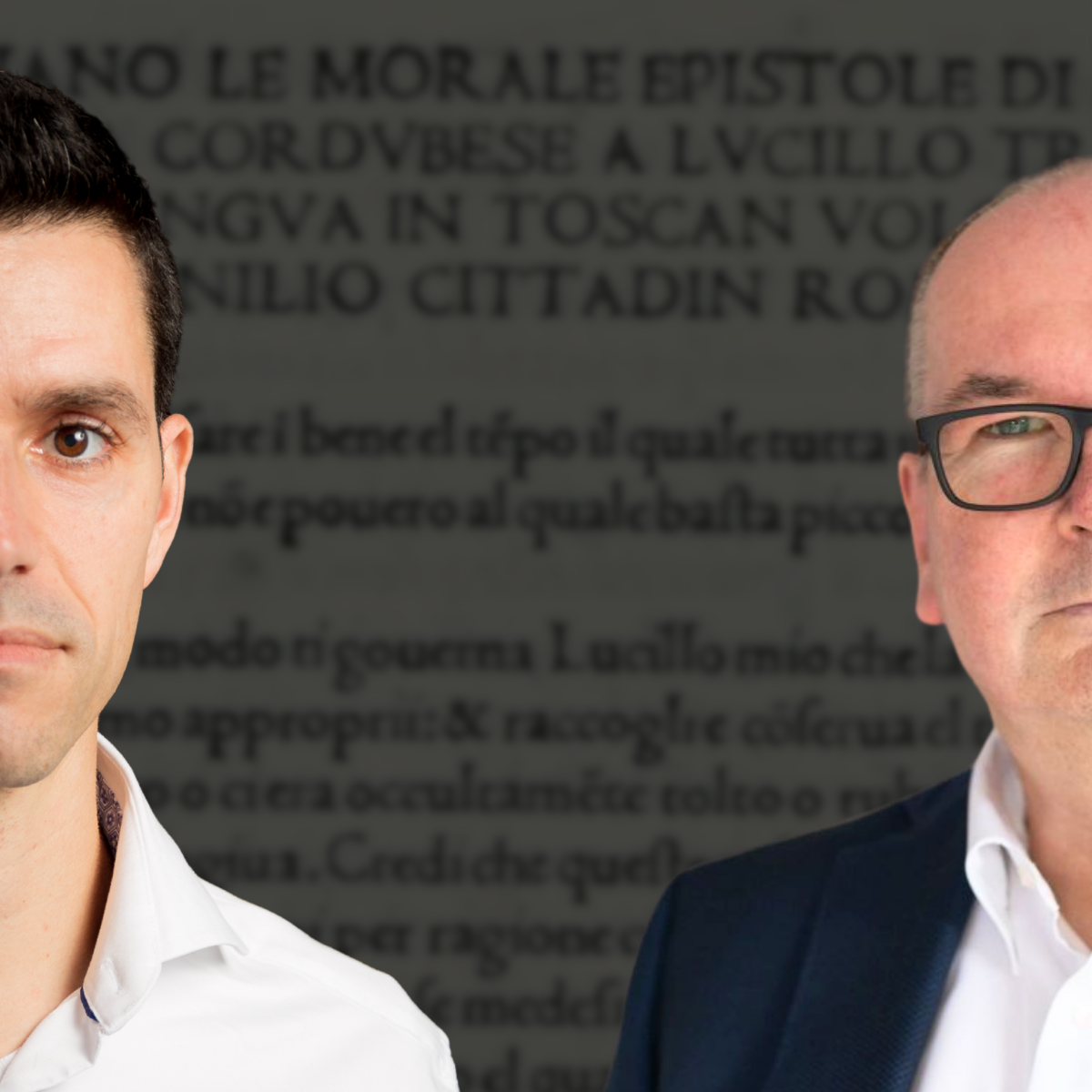
Fourteenth letter from Andreas Bruckmüller to Michael Mrak
Dear Michael,
Your letter is one of the darkest so far. You ask whether the planet is finished, you reach for the law as the last lever that still moves, and between your lines I hear a man rehearsing his surrender. Friendship permits plain speech, so let me be plain. I see no cause for it.
You have met the hardest audience there is. These people answer evidence with defiance, they order the new oil boiler precisely because the world tells them to stop, and they hear “now more than ever” in every warning. From that encounter you draw your conclusion: where the bright picture of the future, the utopia of the open country, fails to move them, the law must step in, with prohibition and perhaps with punishment.
There is a third way, and it is older than both of ours. It says: let them be. It refuses confrontation and it refuses retreat in the same breath. You listen, you grant the man his opinion, and you keep your hours for better ground. Sun Tzu, a general who wrote on war some two and a half thousand years ago, warns in The Art of War against every battle that cannot be won; the highest skill, he says, lies in prevailing without fighting at all. Your neighbour’s boiler room is such a battle. Dale Carnegie reached the same shore from the civilian side: an argument, he wrote in How to Win Friends and Influence People, cannot be won, because the man defeated in debate keeps his conviction and adds a grudge to it. So do not even enter the discussion at the garden fence.
A battle avoided is not a battle lost.
Where, then, should the energy go? It belongs to the broad middle, to the many who are undecided and the many more who are already circling the decision without daring the final step. Ask what each of them lacks, whether it is money, access or information, and supply exactly that. Malcolm Gladwell described in The Tipping Point how behaviour spreads like an epidemic: a movement needs no majority to become unstoppable, it needs a committed few and a threshold. Every heat pump on the street lowers that threshold for the next house. The undecided watch the meter you spoke of far more closely than the refusers ever will.
Your neighbour, meanwhile, deserves a gentler answer. Grant him his joy, because time is already working on your side. The market runs its old course from innovation to commodity. What counts as exotic today will hang in every cellar tomorrow, cheaper each year and more boring with every season, until it becomes the new normal, and the new normal asks no one for conviction. One day the old boiler will fail, the parts will grow scarce, the oil will grow dear, and he will switch quietly, with a sigh and a sentence like “I suppose nothing else is left to me.” Some will surprise themselves and take sudden pride in the new machine. Congratulate them when they do.
A late follower is still a follower.
And if we reach ninety-eight in a hundred rather than every last one, the good deed stands. Perfection is a fine ambition and a poor plan.
You also placed a larger question in the room: whether we are watching the last flare of the defiant old man. I am no clairvoyant, and I will not promise you that it is the last. My instinct reads it as one of the patterns history repeats in its iterations: the young push against the old and demand the future, the old defend the world they built, and the future arrives anyway, a little later than needed and a little sooner than feared. Biology plays its quiet part in this. With age our chemistry shifts, and the appetite for risk and change declines with it. You may remember; we sat in the same lecture.
Yet let me turn you back towards the light, because the pattern has exceptions and they carry weight. I know older people who try the new until the end, who mount the panel, drive the electric car and read about the next thing with the curiosity of a student. The difference lies rarely in the year of birth. It lies in the bubble a person inhabits and in the media that feed it.
And there, Michael, sits the question I want to hand you. The media have drunk the devil’s water. They have learnt that fear binds an audience faster than hope, and they work the emotional capture of the negative with industrial discipline. Social media pours the accelerant on top. I notice the effect on myself: I turn away more and more, because the constant bombardment with the negative costs more than it informs. Sober facts do not break the spell, for the grip is emotional and reason arrives too late at the scene. So what remains there? Are these, in the end, the bans that would work, the ones you wanted for the boiler and I declined? I distrust that door even here, and I do not yet see a better one.
Fear binds an audience faster than hope.
So this is where I leave you, in better spirits than your letter found me, I hope. Let the refusers keep their boilers a while longer; the tipping point will not wait for them, and neither should we. Spend the strength on the middle, let time collect the rest, and tell me in your next letter where our media should go from here. You live closer to that question than I do, and I suspect your answer will be worth the wait.
Let us keep going.
Andreas
This text is an experiment: a public exchange of letters between Michael Mrak and myself, inspired by Epistulae morales ad Lucilium, in which reflections on sovereignty far beyond the digital context are developed further through dialogue.