
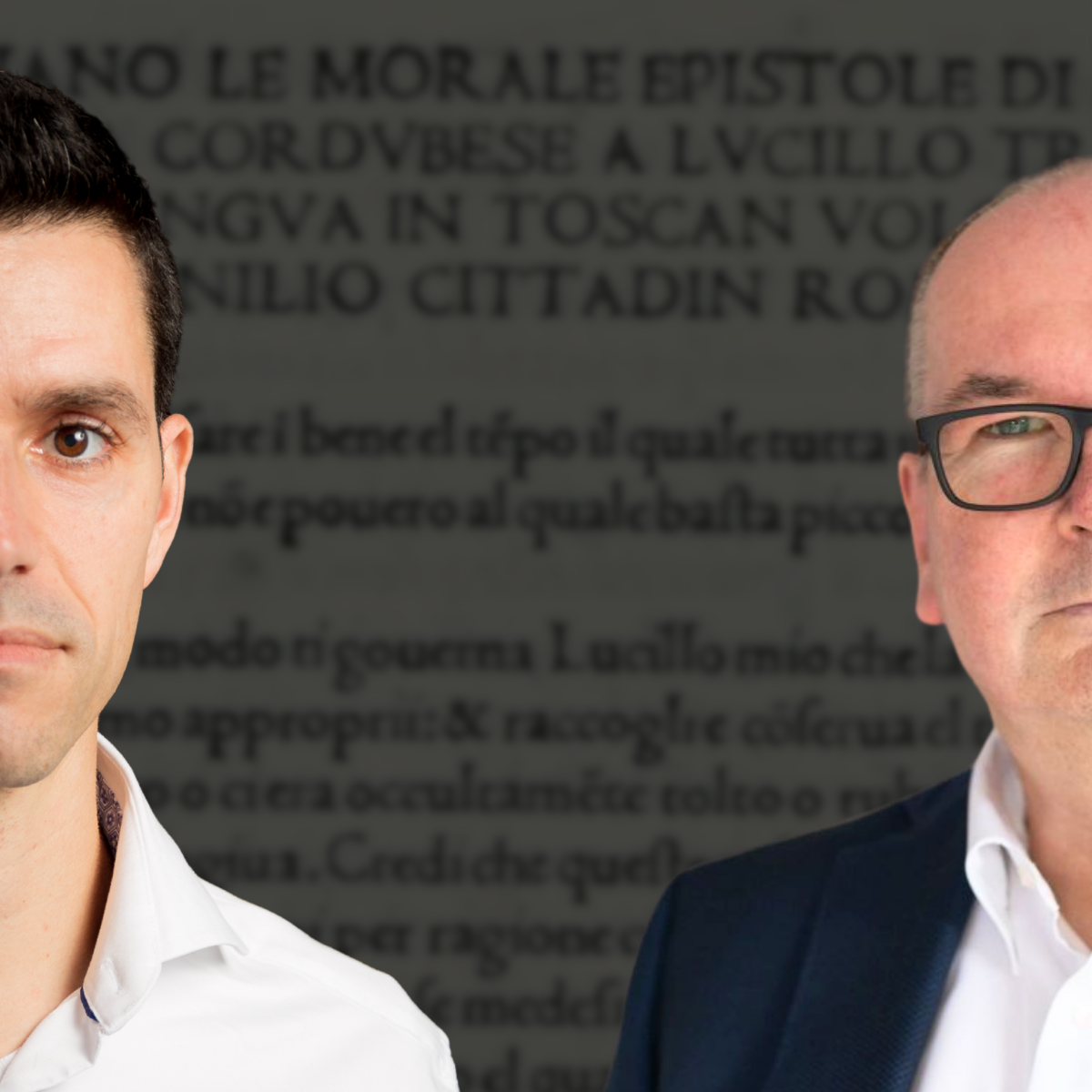
Thirteenth letter from Michael Mrak to Andreas Bruckmüller
Dear Andreas,
At the end of your twelfth letter you handed me a task, and I accept it the way one accepts a task one suspects will exceed one’s strength. How do you build the trust that makes people willing to let a grid reach into their homes? You have built your proof, your meter holds, you are the neighbour with the heat pump. And you say the technical act is the cultural argument. For those who look, you are right. My honest beginning is a different one: I know people for whom your meter does not exist, because they refuse to look at it.
Let me tell you about them, for they are the reason I love your optimism and still do not entirely trust it.
They are people my age and younger. They say sentences like an electric car will never enter my house, and they say it with a finality that permits no further question. One of them, last winter, with his eyes open, had a brand-new oil boiler installed. Not out of need, not because nothing else was possible. Out of defiance. He knows the numbers. He reads the same news I do. He sees the summers that are no longer the same, the soils that are changing, the insurance premiums that rise. And he decides to let none of it count.
In my eleventh letter I separated two kinds of denial: the ideological, built from identity, and the exhausted, born of overload. These people are a third figure, or more precisely, the ideological kind in its most comfortable, most domestic form. It is not the paid lobbyist and not the desperate soul at night. It is the man, because it is mostly men, who has arranged his life in a certain world and experiences change not as a fact to be weighed but as an insult to what he has built. His no is not a gap in knowledge. It is a decision taken in advance.
Whoever refuses the proof refuses not the truth but himself.
And here, Andreas, I must admit something to you that I have spared you in every letter so far. There I do not get through. Not with your meter, not with the neighbour and his heat pump, not with my patience, not with the question before the answer that I imposed on myself. You wrote that every decision has its price. The price this man would have to pay is the admission of having defended the wrong world for a long time, and that price he is not willing to pay. He would rather pay it in heating oil. The cultural argument you speak of runs off him like water off paintwork. I will not pretend otherwise.
So what closes the window when the man at the window refuses to choose? Only one thing remains. The law.
The law has the great advantage that it has to convince no one. It has to shake no identity and voice no worry. It sets the price, it removes the cheap way out, it turns the oil boiler into the expensive folly it is already becoming economically. What you call the appetite for decision, the disposition of the individual, bears a different name at the level of society: regulation. It is the collective form of your private decision. It decides at the window for those who do not want to decide.
The law has to convince no one. It only has to close the cheap way out.
And exactly here, my friend, my optimism collapses, and I hand your task back to you harder than you gave it to me. Look at what is happening to the lever I am counting on.
The combustion-engine phase-out for 2035, one of the few stakes we had in the ground, was pulled out in December. One hundred per cent became ninety, hybrids and e-fuels and combustion engines may run on, the rest is offset against green steel. The German chancellor Merz wrote a letter to Brussels, industry applauded, and in spring parliament watered the matter down further. The EU climate target for 2040 stands, ninety per cent, adopted in March. But it stands on soft ground: from 2036 up to five per cent through international certificates, which leaves only eighty-five per cent at home, biennial reviews built in expressly so the target can be lowered along the way, and the ETS II pushed back a year. And here in Austria, the Renewable Heat Act, which was meant to make the exit from oil heating binding for existing buildings, got stuck at the two-thirds majority and shrank at its core to new construction. For existing buildings the obligation is missing. That is exactly why my acquaintance could install his new boiler entirely legally. The lever I am counting on is being kicked away by the very hands that ought to hold it.
And it is not happening by chance. In an earlier letter you spoke of the dividers, of those who profit from decay. They are back, and they are pied pipers in the literal sense: they gather the frightened around them by recasting the opportunity as a threat. The transition that would lower costs and harden us against dependency is sold as the thing that is coming to take from them the car, the boiler, the familiar world. And across the Atlantic, the leader of the strongest economy in the world has made drill, baby, drill an article of faith, has left the Paris Agreement for the second time, and in January in Davos called sustainable energy policy the greatest swindle in history. The most powerful man on earth declares the meter a fraud. What chance does my acquaintance’s meter have when his president tells him the meter lies?
Which brings me to the question I really want to put to you, and I put it without the protective posture a letter otherwise allows. Is this a passing flare, the last loud struggle of an order that has long known it is dying? Or are the planet and the people on it truly finished? I will not hide from you that I ask this. I ask it when I come out of a conversation like the one quoted above, one that did not go well, and I ask it when I read the news.
And then, my friend, I catch myself, for I recognise the voice. The sentence we are finished is my own exhausted denial, wearing my face. It is exactly the door that fell shut because it stood open too long. To declare oneself lost is the one move that guarantees the refusers their victory, for resignation is what they are betting on. They need us tired. Tired people no longer take decisions.
Resignation is the only defeat that fulfils itself.
Physics does not care about Davos. The cost curve you sent me does not reverse because a president denies it. The cheapest electricity in history remains the cheapest, whether it is called a swindle or not. And the numbers that fill me with dread, the year 2024 as the first above one and a half degrees, the path heading towards two and a half, three, are not a verdict. They are a measurement of how much still lies in our hands. Lost is a decision, not a fact. And that is the one decision I refuse.
So here is my answer to your task, and the question I hand back to you. Trust is not built through argument, and not through the meter alone. It is built by making the right choice the easy and the cheap one, by a law that protects the willing from the unwilling, and by refusing the pied pipers the resignation they feed on. The man with the new oil boiler I may never reach. But I do not write for him. I write for the greater number who are still watching which way the wind turns, which way the law turns, which way we turn. You called for the appetite to decide. Then let the decision be this: not to wait for the refusers, and not to despair of them. Build the proof, hold the line at the law, outlast the flare.
If it is a flare, we win by enduring it. If it is the end, we lose nothing by having acted as though it were not. In both cases action is the only stance that carries its price.
So let us carry on, not because the outcome were certain, but because the certainty of failure is the only one we cannot afford.
Michael
This text is an experiment: a public exchange of letters between Michael Mrak and myself, inspired by Epistulae morales ad Lucilium, in which reflections on sovereignty far beyond the digital context are developed further through dialogue.