
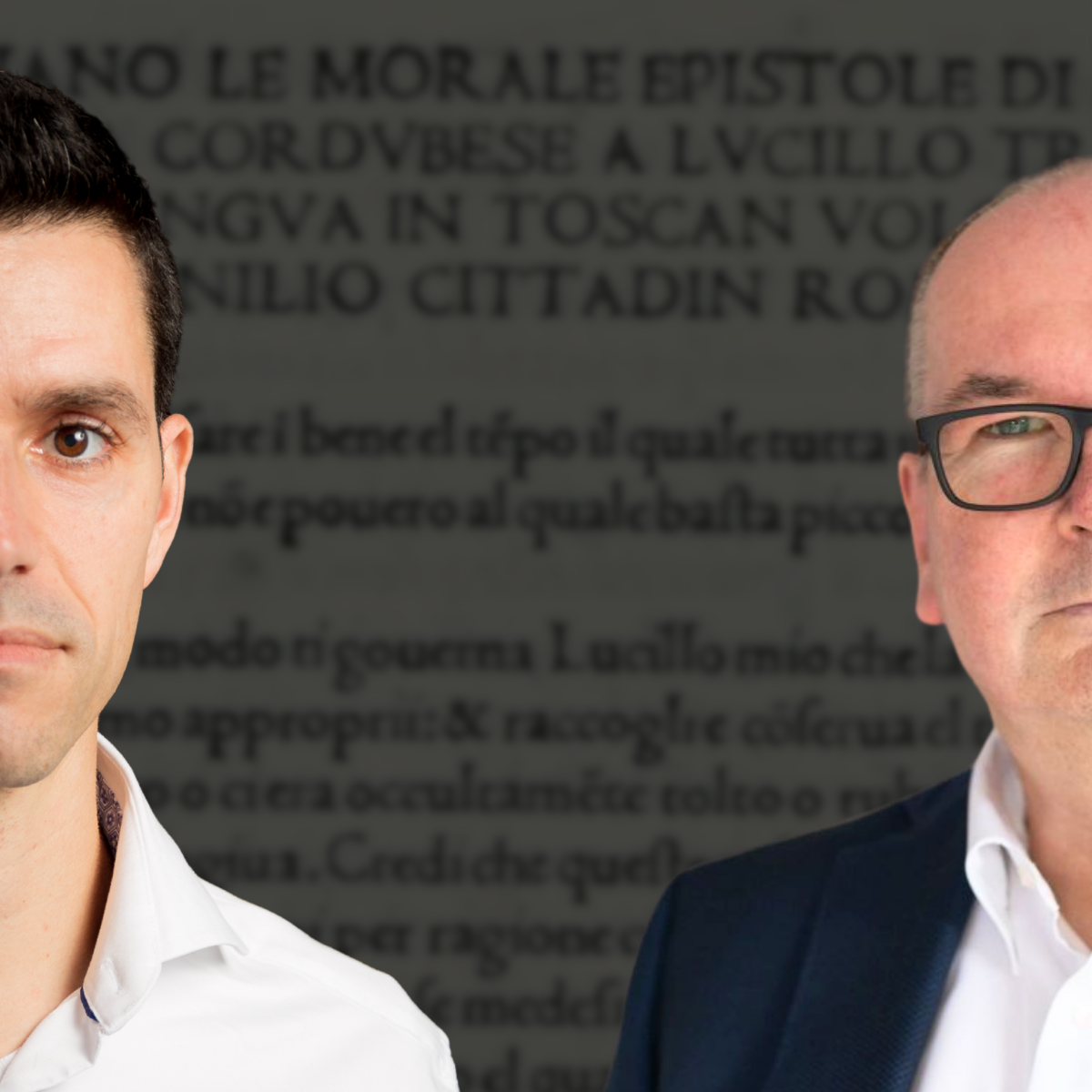
Tenth Letter from Andreas to Michael
Dear Michael,
Your ninth letter arrived at the right time, and at the wrong time, which is often the same thing. The right time, because the question you raise is the one that shadows every other question we have exchanged. The wrong time, because the news of the past months has tested the very dispositions I named in the eighth letter.
One could read the present moment as a defeat. The American withdrawal from climate policy. The European dilution you describe. The lobbying figures you cite. Wars in Ukraine, around Israel, now Iran. The word “war” is, in each case, a euphemism for several things at once. These crises do not merely run alongside the climate question. They cover it. They borrow the headlines, the budgets, the political attention. The largest theme of our century moves to the back pages.
Read soberly, the recent measures are short-term political agitation. Not strategy. The instinct to preserve the old rather than to step forward and bring people with you. The promise to voters that nothing must really change.
One could grant this a more generous reading. Emergency. The house is on fire. You put it out first. You do not debate, in that moment, whether the car parked in front of the house was scratched by the hose, or whether every step of the firefighting protocol was followed. That argument can hold. Crises require contraction. But it holds only if the preparation existed before, and the anchoring follows after. That is where I see the failure. The careful work of building climate protection into how we live and work, durably, beyond the next election cycle, is not yet done. And no follow-up measures are visible. The agitation is not framed by anything larger. It is the whole posture.
So I draw a different conclusion than the one the headlines invite. Not despair. Acceleration.
Politics will not lead this transition. Politics will follow it, eventually, when the fact of it is undeniable.
That is not cynicism. It is the pattern of every structural shift I have watched over twenty-five years of business life. The market moves. The rules catch up. The board moves. The company catches up. The early movers shape the conditions the late movers then accept as given. Anyone waiting for Brussels, Berlin or Washington to clear the path is waiting for the wrong actor. The actors who matter sit in supervisory boards, in management teams, in town councils, at kitchen tables. They sign procurement contracts. They specify fleets. They place capital. They choose suppliers. They hire people. Each of these decisions either accelerates the transition or delays it.
The arithmetic, in the meantime, has changed. That is the part of the situation I would underline most strongly, because it changes the conversation from sacrifice to advantage. Renewable electricity is now, in most European markets, cheaper than electricity from fossil sources. That was a forecast a decade ago. It is a fact now. Operating costs in industry, in logistics, in commercial property fall when the supply switches. The chaos of the last years has actually widened the gap. Gas prices have been volatile. Renewable prices have not. The hedging case for renewables has become as strong as the climate case.
The same holds for transport. The cost per kilometre of a battery-electric vehicle, for fleet operators in particular, is now lower than the comparable diesel. Maintenance is lower. Downtime is lower. Total cost of ownership, the only number that should ever guide a fleet decision, has crossed the line.
The investment case for the energy transition no longer depends on conviction. It depends only on arithmetic.
Conviction is now a help, not a prerequisite.
Companies have a lever that individuals do not. Scale. A single household electrifying its heating is one decision. A facility manager electrifying a portfolio of one hundred buildings is one decision with the weight of a thousand. So the call I would make, to anyone reading this who sits in such a position, is simple. Electrify. The public transport you commission. The fleets you operate. The heat you generate. The capital you allocate. Move it, before the conditions move it for you, on terms you no longer control.
There is a second reason, beyond the economic one. The majority of people in our societies want this transition to succeed. They are quieter than the deniers, but they are larger in number. They want to work for companies whose direction they can defend at their kitchen table. They want to feel that what they do for forty hours a week is part of the answer rather than part of the problem. A company that takes the energy transition seriously, and acts on it, recruits more easily, retains more easily, and earns the kind of loyalty that does not show up on a payslip. The teams that pull hardest are the teams that believe the work is going somewhere worth going.
You took the four dispositions I named and applied them to the climate question with more care than I did. I will not repeat the exercise. I will only say that you are right about each of them, and that the one I find hardest in this debate is the fourth. Staying positive in a year of retreat is a form of work. It is not optimism. It is the discipline of refusing to let the temporary darken what is, by every economic and technological measure, an accelerating shift.
The political misdirection of these months is not a brake. It is an accelerant for those who refuse to wait.
Every quarter that policy hesitates, the cost gap widens. Every season that incumbents lobby for protection, the next generation of customers, employees and investors moves further from them.
So my answer to your letter is shorter than yours, and only because the case has, by force of fact, become simpler. We do not need a new strategy. We need to act on the one we have. The technology is here. The economics are here. The people are here, in greater numbers than the noise suggests.
Let us get on with it. Let us go ahead. It can be done better. It is being done better, somewhere, every day. The question is which side of that fact our next decisions sit on. I know which side I choose.
Andreas
This text is an experiment: a public exchange of letters between Michael Mrak and myself, inspired by Epistulae morales ad Lucilium, in which reflections on sovereignty far beyond the digital context are developed further through dialogue.