
Sixth letter from Andreas to Michael
Dear Michael,
you ended with division. I begin with silence.
Not the comfortable silence of contemplation but the paralyzing silence of people sitting in the same room, no longer saying anything to each other. Who look away when a decision is due. Who nod when they want to disagree. I know this silence. Not from books. From conference rooms.
You are right. And yet I think the diagnosis leads us astray if we stop there. The problem is not the noise. The problem is that we have learned to use the noise as an excuse. We wait for the right format, the right moment, the right room. Meanwhile the silence grows.
Someone has to decide to speak first, not because the conditions are right, but precisely because they are not.
And that is not a systemic task, it is a personal one.
The same pattern you describe on the grand stages (Athens, Rome, the demagogues of history) I see in the small. As a manager, you sometimes enter situations where the conversation stopped long ago. Not because someone shouted. But because for months no one has clearly said what they actually think. Because politeness has replaced honesty. Because everyone knows the truth and no one speaks it. This is not dramatic division – no peasant wars, no demagogues. But the pattern is identical:
whoever controls the silence controls the room. And in that vacuum grows exactly what you describe: mistrust, factions, quiet coalitions.
The only difference from grand politics is the size of the stage.
What follows from this? Here lies my sharpest objection to a thought you did not explicitly state, but implied: that discourse is the first step. I believe: sometimes someone must decide first. Not because listening is unimportant. But because a conversation needs ground to stand on.
There is a concept worth naming here – the consultative management style. It does not mean deciding by committee, nor does it mean softening every position until it offends no one.
It means deliberately seeking input before committing to a direction, then having the clarity to commit.
Whoever merely moderates in a divided room gives division time. Whoever listens purposefully and then decides , gives others something to push back against. And pushback is where discourse begins. Paralysis does not arise where too many decisions are made. It arises where no one finds the courage to take the first step. Into that vacuum flows, as you rightly write, either manipulation or standstill. Both are worse than an uncomfortable decision. Deciding is not the opposite of listening. It is the precondition for it.
And this brings me to a dimension missing from your letter – not as criticism, but as addition. You think of community politically. That is right. I also think of it economically. Jim Whitehurst, in his concept of the open organization, describes what happens when organizations are built around the assumption that good ideas can come from anywhere and that people perform better when they understand not just what to do, but why. This is not idealism. It is architecture. Teams that practice genuine discourse where disagreement is not punished but expected make better decisions. Faster. With fewer corrections along the way. This is not a claim from the realm of fine words, it is measurable. And yet we treat community in organizations as optional as something you afford yourself when the numbers are good. It is the other way around: the numbers are good because the community is good. Whoever understands this does not build wellbeing programs. They build structures in which genuine conversation is possible. Not as an end in itself, but because it works.
You close with a collective demand: we must restore spaces for discourse. I agree. But collective demands are the most comfortable form of avoiding responsibility. As long as “we” must act, “I” do not have to. So I ask the more uncomfortable question: who starts? The answer I have found after many years and many conference rooms is simple: the one who notices first. Not the one with the biggest title.
Not the one with the best plan. But the one who recognizes the silence and breaks it.
That is not a heroic gesture. It is often tedious, thankless, and initially without effect. But systems do not change through grand moves. They change through individual people who stop waiting. Stop waiting for someone else to create the space. Create it yourself.
Stay uncomfortable, Michael. That is the kindest thing I can wish you.
Andreas
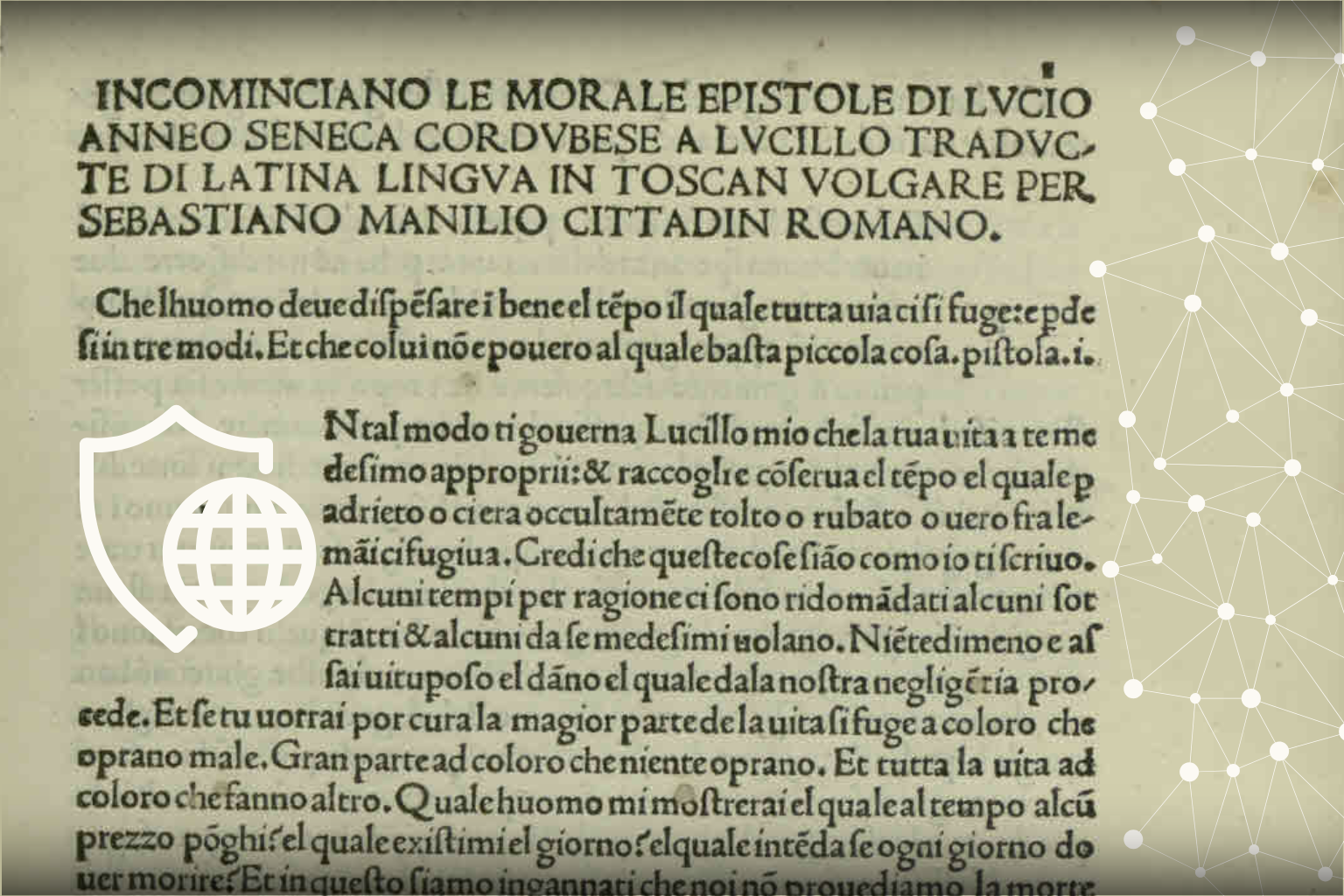
This text is an experiment: a public exchange of letters between Michael Mrak and myself, inspired by Epistulae morales ad Lucilium, in which reflections on sovereignty far beyond the digital context are developed further through dialogue.