
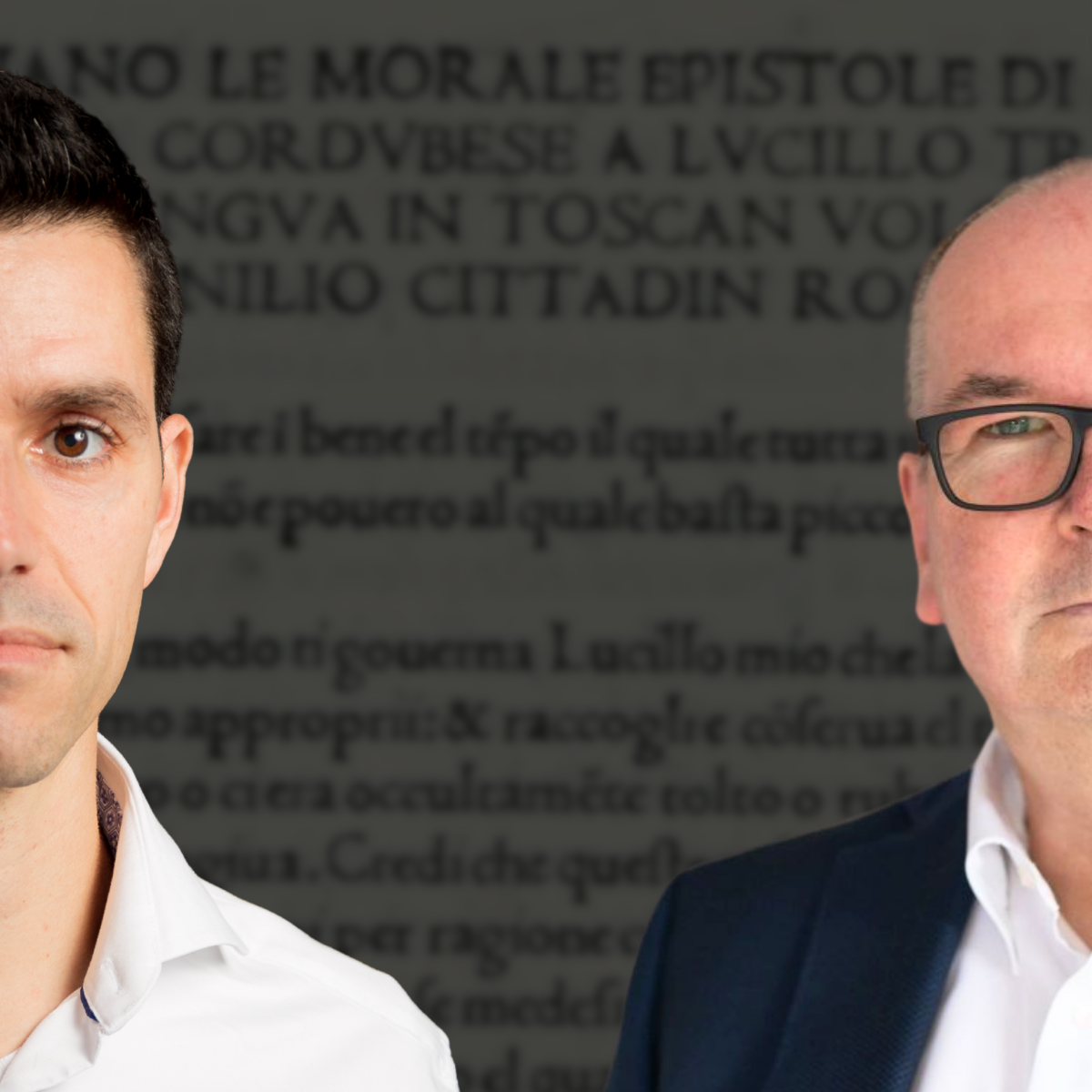
Seventh letter from Michael to Andreas
Dear Andreas,
six letters lie behind us. We have named the dependency, described the silent erosion of European agency, exposed jurisdiction as the true seat of power, and recognized division as the method of those who profit from decay. You spoke of the silence in meeting rooms, called for a consultative leadership style, and reminded us that community is the opposite of dependency. And you asked: who starts?
Today I want to attempt an answer that goes beyond the individual. Because I believe, Andreas, that we are standing in the middle of a historic moment that many have not yet recognized for what it is: an enormous opportunity.
The geopolitical rupture that troubles us is at the same time the strongest wake-up call Europe has received in a generation.
Yes, the transatlantic relationship is under pressure. Yes, the digital dependency is structural. Yes, the fragmentation of Europe is real. We have described all of this, honestly and without embellishment. But when I look at Europe today, I see something that has received too little attention in our previous letters: the enormous intellectual capacities this continent possesses, and which are being mobilized right now, in this very moment.
Europe has a density of scientific excellence that is unmatched anywhere in the world. From ETH Zurich to the Fraunhofer network, from the Grandes Écoles to the TU Vienna and the Scandinavian centres of excellence. We have researchers who are among the world leaders in quantum computing, AI safety, cryptography, and sustainable technology. We have an engineering culture that combines precision with responsibility. We have a humanist tradition that does not treat technology as an end in itself, but as a tool in service of the human being.
There is no lack of alternatives. The building blocks are ready. What has been missing until now is the collective will to put them together.
And here, something is shifting. The geopolitical situation is forcing Europe to grow up. Not as a reaction to a threat, but as the recognition of a possibility. The dependency on foreign infrastructure, which we analyzed so soberly in our letters, is now being understood by more and more actors not as fate, but as a design challenge.
What is happening right now
Let me be concrete, Andreas, because we have exchanged enough abstract appeals. What makes me optimistic is the sheer momentum of European initiatives that have emerged or gained decisive traction in recent months.
InvestAI and the AI Gigafactories: The European Commission is mobilizing 200 billion euros for artificial intelligence through the InvestAI initiative, of which 20 billion is earmarked for up to five AI Gigafactories. Each will have access to more than 100,000 AI chips. 76 expressions of interest from 16 member states have been submitted. This is no longer a PowerPoint slide. This is industrial reality in the making.
EURO-3C: At Mobile World Congress 2026 in Barcelona, the European Commission, together with more than 70 organizations from across Europe, presented the EURO-3C project. 75 million euros for Europe’s first federated Telco Edge Cloud infrastructure. More than 70 edge and cloud nodes in more than 13 countries. Not a centralized platform, but a federated network that connects existing infrastructure. This is precisely the architecture that corresponds to our European diversity.
EuroStack: An industrial policy vision covering the entire digital stack, from semiconductors through cloud and AI to platforms. Supported by a cross-party coalition in the European Parliament, backed by scientists such as Francesca Bria and institutions such as the Bertelsmann Foundation. The estimate: 300 billion euros over ten years. The ambition: not to remain a digital colony, but to build a sovereign digital ecosystem.
Euro-Office: At the end of March 2026, IONOS, Nextcloud, and a dozen European partners presented the Euro-Office project in Berlin: an open-source office suite as a sovereign alternative to Microsoft Office. Fully open, collaboratively developed, compatible with common formats. The first stable version arrives in summer 2026. Frank Karlitschek of Nextcloud puts it plainly: Europe has had the technical building blocks for years. What was missing was the initiative to bring them together.
The Digital Euro: The ECB is advancing the digital euro as a sovereign European payment infrastructure. This is not about digitization for its own sake, but about monetary sovereignty in a world where payment infrastructures are instruments of power.
Estonia’s Open-Source Strategy: Estonia’s Digital Minister Liisa Pakosta calls digital sovereignty a matter of “national survival.” The country is accelerating its open-source-first strategy and increasing investment in sovereign digital capabilities. A small country with an enormous signal effect.
The French-German Summit on Digital Sovereignty: In November 2025, Germany and France convened a joint summit and established a task force that is due to report in 2026. Common standards, coordinated investment, European market power. Exactly what we called for in letter three.
The question is no longer whether Europe can act. The question is whether we have the courage to maintain the pace.
And here I come to two points that are particularly close to my heart.
First: the sovereign. In a democracy, the ultimate decision-making power lies with the people. Digital sovereignty is not an elite project. It will only succeed if citizens understand what is at stake and demand from their elected representatives that European interests not be sacrificed to short-term convenience. Sovereignty does not begin in Brussels. It begins in the consciousness of each individual.
Second: capital. All the wonderful initiatives I have just listed will founder on reality if European investors do not change their thinking. For too long, European money has flowed into American technology companies while European startups had to cross the Atlantic after their seed round to find growth capital. The EIB’s TechEU programme, with the goal of mobilizing 250 billion euros by 2027, is a beginning. But what is needed is a fundamental cultural shift: European investors must understand European innovation as a strategic priority, not as a secondary alternative.
A mood of new beginnings
Andreas, in your fourth letter you wrote that there is no free lunch. That freedom must be worked for, paid for, and suffered for. And in your sixth letter you asked who breaks the silence.
I believe the silence is being broken right now. Not with a great bang, but with a growing number of people and initiatives who act rather than complain. Who build rather than regulate. Who invest rather than debate.
What we need now is a positive mood of new beginnings, carried forward by all of us. By entrepreneurs who develop sovereign alternatives. By investors who think European. By politicians who act with a long-term view. By citizens who consciously choose which digital tools they trust. And yes, also by you and me, as we try in this exchange of letters to keep the discourse alive.
You are entirely right, dear Andreas, that more courage is needed for constructive discourse. Not the shouting, not the outrage, not the talk-show attack dogs, as I called them in my fifth letter. But the honest conversation between parties willing to engage. At eye level. With the goal of becoming better together.
Europe does not need to invent everything itself. But Europe must understand what it uses, control what it must control, and shape what it can shape.
The opportunity is now. The intellectual capacities are present. The initiatives are running. The political momentum is stronger than ever before. What remains is the daily decision of whether we want to be part of this movement, or whether we continue to watch.
I have decided.
In confidence and solidarity,
Your friend Michael
This text is an experiment: a public exchange of letters between Michael Mrak and myself, inspired by Epistulae morales ad Lucilium, in which reflections on sovereignty far beyond the digital context are developed further through dialogue.