
Second letter from Andreas to Michael
My dear friend Michael,
Nothing unsettens a clear mind more than the sight of an error that arises not from necessity, but from convenience. For against what is unavoidable, a person can steel themselves. Against the voluntary surrender of one’s own judgment, they cannot.
You write of a turning point that is unfolding silently. It is precisely in this silence that its danger lies. What arrives with noise provokes resistance. What happens quietly is accepted.
Not because it is right, but because it does not disrupt the routines of everyday life. This is how freedom is not lost all at once. One grows accustomed to its absence.
Sovereignty, you say, is no luxury. And you are right. What a person does not steer themselves will end up steering them. In the language of power politics, we now call this strategic dependency. Morally, it is nothing other than self-alienation.
Particularly bitter is the disappointment in an order once seen as the bearer of progress. The United States, long a symbol of openness, innovation, and a universal promise of freedom (“the Land of the free and the Home of the brave!”), are not withdrawing in hostility, but with altered priorities. That is their right. Yet it marks the end of an era in which globalization could be understood as a shared project especially in the technological realm.
What we are witnessing is no historical accident. It is the slow end of carefree globalization in the tech sector. Software, until now a largely borderless tool, is once again becoming an instrument of geopolitical order. Decisions about code, standards, and platforms increasingly risk being shaped by national interests, legal reach, and strategic calculation.
The “global village” is not falling apart at its edges; it is losing its common center.
Europe thus faces an uncomfortable truth: we have consumed globalization, but we have not shaped it. We have chosen efficiency over resilience, scale over control, convenience over judgment. That is a poor bargain. For what one gains in time, one loses in freedom.
You speak of the illusion that data locations are sufficient. This is the modern superstition: confusing the location of the machine with the source of power. Sovereignty does not end at the data center. It ends where foreign law takes precedence, where foreign interests can override decisions, and where, in a moment of crisis, one no longer judges for oneself but merely hopes to be spared.
Hope is not a strategy. And trust does not replace control.
And yet, despite the sobriety of reality, there is a glimmer of hope one that operates quietly but with remarkable persistence: the global open-source community.
It may be the last remaining space in which cooperation is not primarily organized along national or commercial lines, but around shared problems, shared responsibility, and verifiable results. Open source is not a romantic counter-model to power politics. But it is practical proof that global cooperation beyond exclusive control, proprietary dependencies, and political leverage is still possible.
Where code is open, at least the possibility of choice remains. And freedom of choice is the core of all sovereignty.
Yet even this glimmer of hope is no self-propelling force. An open community does not protect against political appropriation if its results are blindly embedded in unsovereign structures. Open source is a prerequisite for digital maturity but not a guarantee. It demands European responsibility, our own competence, and active participation instead of passive consumption.
Sovereignty therefore does not mean isolation, but proportion. Exchange is valuable; dependency is not. Globalization without one’s own capacity to act is not openness, it is self-abandonment.
Nowhere is this risk more evident than in software development. Those who use tools whose logic they do not understand, whose evolution they cannot influence, and whose legal framework escapes their control lose more than technological autonomy. They lose the ability to think their decisions independently.
Europe regulates where it should be shaping. And it too rarely shapes where it most directly concerns itself.
Your letter is not a call for alarmism. It is an appeal to the virtue of vigilance.
True freedom does not consist in being able to do everything, but in refusing to accept anything against one’s better judgment.
In this sense, sovereignty does not begin with technology, not with regulation, not with market share. It begins with the decision no longer to accept dependencies as laws of nature and to consciously protect and expand the few spaces of genuine freedom of choice that remain.
My friend Michael, it is up to all of us to be a lighthouse in the darkness and to convince others of the right path.
Without borders. Without delusion.
Not out of ideology. Not out of nostalgia.
But out of responsibility.
With great respect, your friend,
Andreas
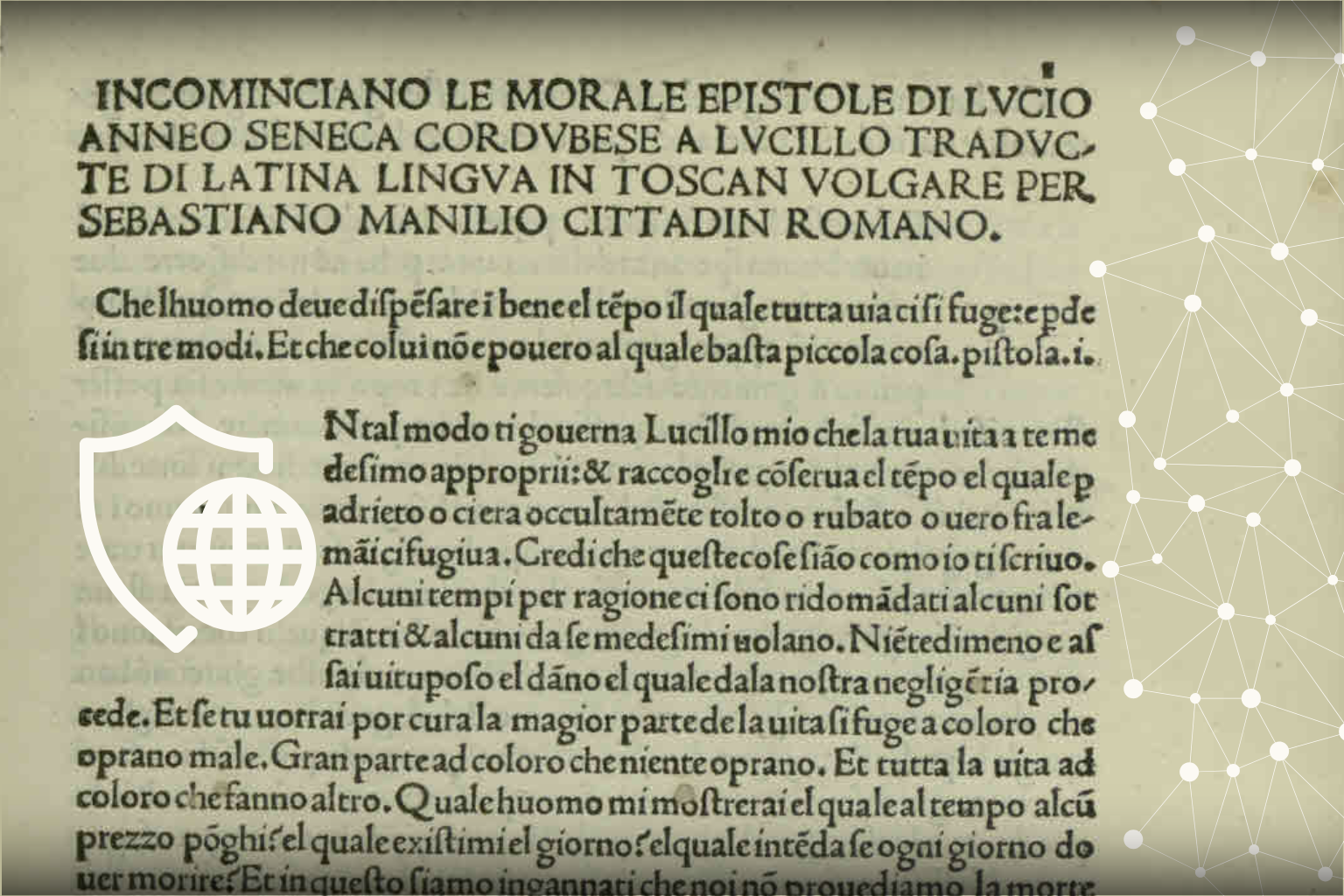
This text is an experiment: a public exchange of letters between Michael Mrak and myself, inspired by Epistulae morales ad Lucilium, in which reflections on sovereignty far beyond the digital context are developed further through dialogue.